
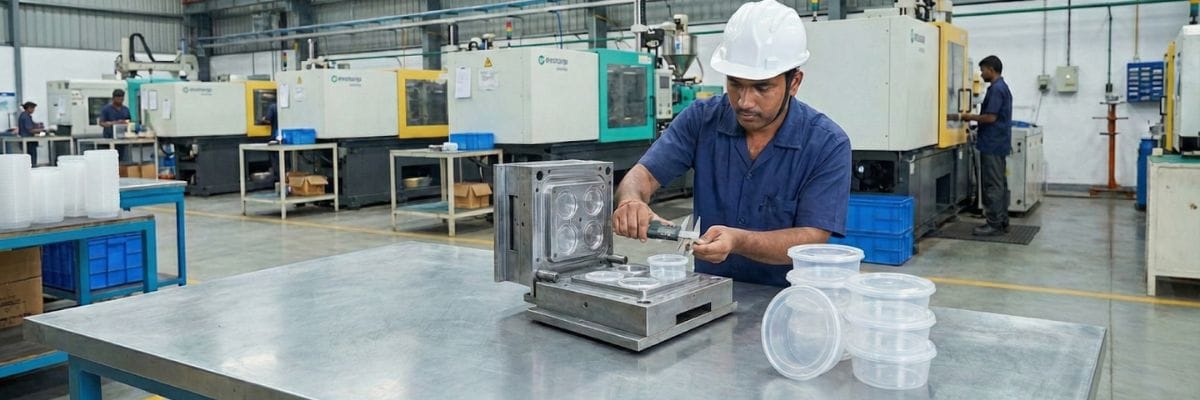
Common Injection Moulding Problems and How a Well-Designed Mould Solves Them
Injection moulding is widely used to produce plastic parts for automotive, electrical, packaging, medical, and industrial applications. While the process looks simple, many manufacturers face quality issues during production.
In most cases, these problems are not caused by the machine or raw material, but by poor injection mould or injection die design.
A well-designed injection moulding die plays a critical role in part quality, production speed, and cost control. In this blog, we explain common injection moulding problems and how an experienced injection mould manufacturer solves them at the design and tooling stage.
Why Injection Mould Design Is So Important
The injection mould (also called injection die or injection moulding die) controls:
- Plastic Flow
- Cooling speed
- Part shape and accuracy
- Surface finish
- Production cycle time
If the mould design is weak, even the best machine cannot deliver consistent results. That is why industrial buyers should focus not only on part price, but also on mould quality and design expertise.
1. Short Shot (Incomplete Filling)
Problem
The plastic does not completely fill the mould cavity, resulting in incomplete parts.
Common Causes
- Poor gate location
- Improper runner design
- Low flow design inside the injection mould
How a Well-Designed Injection Mould Solves It
An experienced injection mould manufacturer designs proper runner balance and gate positioning to ensure smooth plastic flow. Flow simulation and correct cavity layout help avoid short shots even in complex parts.
2. Flash (Excess Plastic at Edges)
Problem
Thin unwanted plastic appears along part edges or joints.
Common Causes
- Poor mould locking surfaces
- Incorrect parting line design
- Low-quality mould manufacturing
Solution Through Good Mould Design
Precision machining and strong mould construction prevent gaps during injection. A high-quality injection moulding die maintains tight tolerances, reducing flash and minimizing rework.
3. Warpage (Part Bending or Deformation)
Problem
The finished plastic part bends or twists after cooling.
Common Causes
- Uneven cooling
- Poor mould cooling channel design
- Non-uniform wall thickness
How a Good Injection Die Helps
A well-designed injection die uses balanced cooling channels and uniform wall thickness planning. This ensures even cooling, reducing internal stress and improving dimensional stability.
4. Sink Marks
Problem
Small depressions appear on the surface of the plastic part.
Common Causes
- Thick wall sections
- Improper cooling design
- Poor material flow
Mould Design Solution
Injection mould designers optimize wall thickness and cooling layout. Proper rib design and controlled material flow reduce sink marks and improve surface finish.
5. Weld Lines (Weak Joining Points)
Problem
Visible lines where two plastic flow fronts meet, reducing strength.
Common Causes
- Poor gate location
- Improper flow direction
How Injection Mould Design Fixes This
Correct gate placement and flow path planning allow plastic to merge smoothly. Advanced injection moulding die design improves both appearance and mechanical strength.
6. Burn Marks
Problem
Dark or burnt areas appear on the plastic surface.
Common Causes
- Trapped air
- Poor venting in the mould
Solution Through Better Injection Mould Venting
A professional injection mould manufacturer adds proper venting to release trapped gases. This improves part quality and prevents surface damage.
7. Low Production Efficiency
Problem
Slow cycle time increases cost per part.
Common Causes
- Poor cooling design
- Inefficient mould layout
How a Well-Designed Injection Mould Helps
Optimized cooling channels and strong mould materials reduce cycle time. A good injection moulding die improves productivity without compromising quality.
Why Choosing the Right Injection Mould Manufacturer Matters
Not all mould makers offer the same level of expertise. A reliable injection mould manufacturer:
- Understands industrial production needs
- Designs moulds for long life and repeatability
- Uses quality tool steel
- Follows strict quality checks
- Supports export and high-volume requirements
For Indian manufacturers and global buyers, choosing the right partner ensures consistent quality, lower rejection rates, and better ROI.
Injection Mould Quality = Better Product Quality
Many injection moulding problems can be avoided at the design stage itself. Investing in a well-designed injection mould or injection die reduces:
- Production losses
- Machine downtime
- Maintenance costs
- Customer complaints
This is why experienced manufacturers focus on mould design, precision manufacturing, and testing, not just price.
Final Thoughts
Injection moulding problems are common but they are not unavoidable.A well-designed injection moulding die, created by an experienced injection mould manufacturer, solves most quality issues before production even starts.
If you are planning a new product or facing repeated moulding issues, reviewing your mould design is the first and most important step.
Looking for a Reliable Injection Mould Manufacturer in India?
At R D Mould, we design and manufacture high-quality injection moulds and injection dies for industrial applications, focusing on precision, durability, and consistent production results.
📩 Contact us today to discuss your injection mould requirement and get expert guidance.


